Healthy Snacks: What Actually Makes a Snack Filling, Balanced and Nutritious?



What Makes Healthy Snacks Different from Ordinary Snacks?
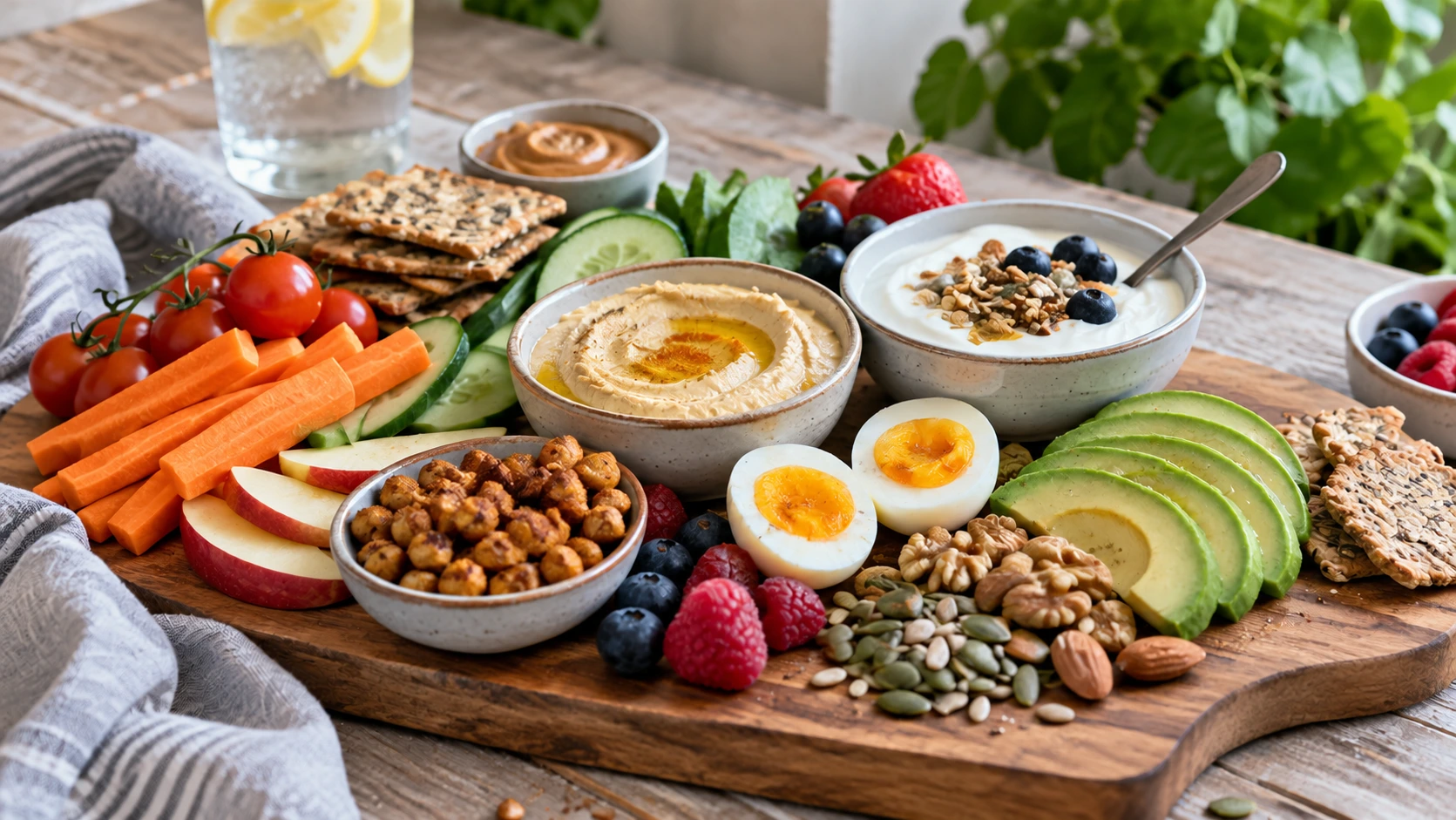
A good snack should do more than simply stop you feeling hungry for twenty minutes. The best healthy snacks combine ingredients that provide useful nutrients, satisfying texture and enough substance to keep you going until your next proper meal. If you're looking for filling snacks, the answer usually isn't a bigger portion of the same food. It's about combining protein, fibre, healthy fats and slow-digesting carbohydrates in a way that actually tastes good.
That doesn't mean every snack needs to look like a nutritionist designed it. A handful of nuts, yoghurt with fruit, hummus and vegetables or a well-made savoury snack can all work. What matters is what the snack contributes and how the different ingredients work together.
Healthy Snacks Should Have More Than One Useful Element
One of the simplest ways to build a better snack is to stop thinking about individual ingredients and start thinking about combinations.
Protein helps make filling snacks more satisfying
Protein is particularly useful when you're trying to make filling snacks. Eggs, Greek yoghurt, cottage cheese, hummus, chickpeas, chicken, fish, tofu and nuts can all contribute protein.
You don't necessarily need a huge amount. A boiled egg with some sliced vegetables can be surprisingly satisfying. Greek yoghurt with berries and seeds works for a sweeter option.
Protein also gives you plenty of room to change the style of a snack. Chickpeas can be roasted until crisp, blended into hummus or added to a wrap. Eggs can be boiled, scrambled or cooked into small savoury muffins.
Fibre adds substance
Fibre is another important piece of the puzzle. Vegetables, fruit, oats, beans, chickpeas, wholegrains, nuts and seeds are useful sources.
This is one reason a snack built around whole ingredients often feels more substantial than something made primarily from refined carbohydrates.
A few carrot sticks on their own might not keep you satisfied for long. Add hummus and suddenly you've got a much more substantial combination.
Healthy fats bring flavour and staying power
Avocado, nuts, seeds, nut butters, olive oil and some dairy foods can add fat to a snack.
Fat also makes food more enjoyable. A completely fat-free snack can sometimes feel like you're eating something because you think you should rather than because you actually want it.
The trick isn't to make every snack high in fat. It's to use ingredients such as avocado, tahini, nut butter or seeds deliberately, alongside other nutritious foods.
Filling Snacks Need Texture Too
Nutrition isn't the only reason some snacks feel more satisfying.
Texture changes how you experience food. A crisp roasted chickpea, crunchy cucumber, creamy hummus and soft avocado create a much more interesting snack than several spoonfuls of the same texture.
This is especially useful when making food for children.
A snack can become more appealing simply by changing its shape or texture. Cucumber ribbons rolled around hummus, carrot and avocado feel completely different from a plate of chopped cucumber and carrot, even though the ingredients are largely the same.
We've explored this idea in 5 Creative Snacks for Kids That Are Healthy, Filling and School-Friendly, where familiar ingredients are used in less predictable formats.
Crunch can make a simple snack more interesting
Roasting is one of the easiest ways to add crunch.
Chickpeas are a good example. Drain them, dry them thoroughly, season them and roast or air fry until crisp. They can then be eaten alone or sprinkled over yoghurt, salads, hummus or avocado.
Seeds can do the same thing. Pumpkin seeds, sunflower seeds and sesame seeds add a small amount of crunch without requiring much preparation.
Creamy ingredients balance crisp textures
Hummus, avocado, yoghurt and cottage cheese provide a completely different mouthfeel.
Try combining one creamy element with something crisp rather than building an entire snack around soft foods. Greek yoghurt with toasted oats and berries is more interesting than yoghurt on its own. Hummus with cucumber and roasted chickpeas gives you three very different textures in one bite.
The Best Ingredients for Healthy Snacks
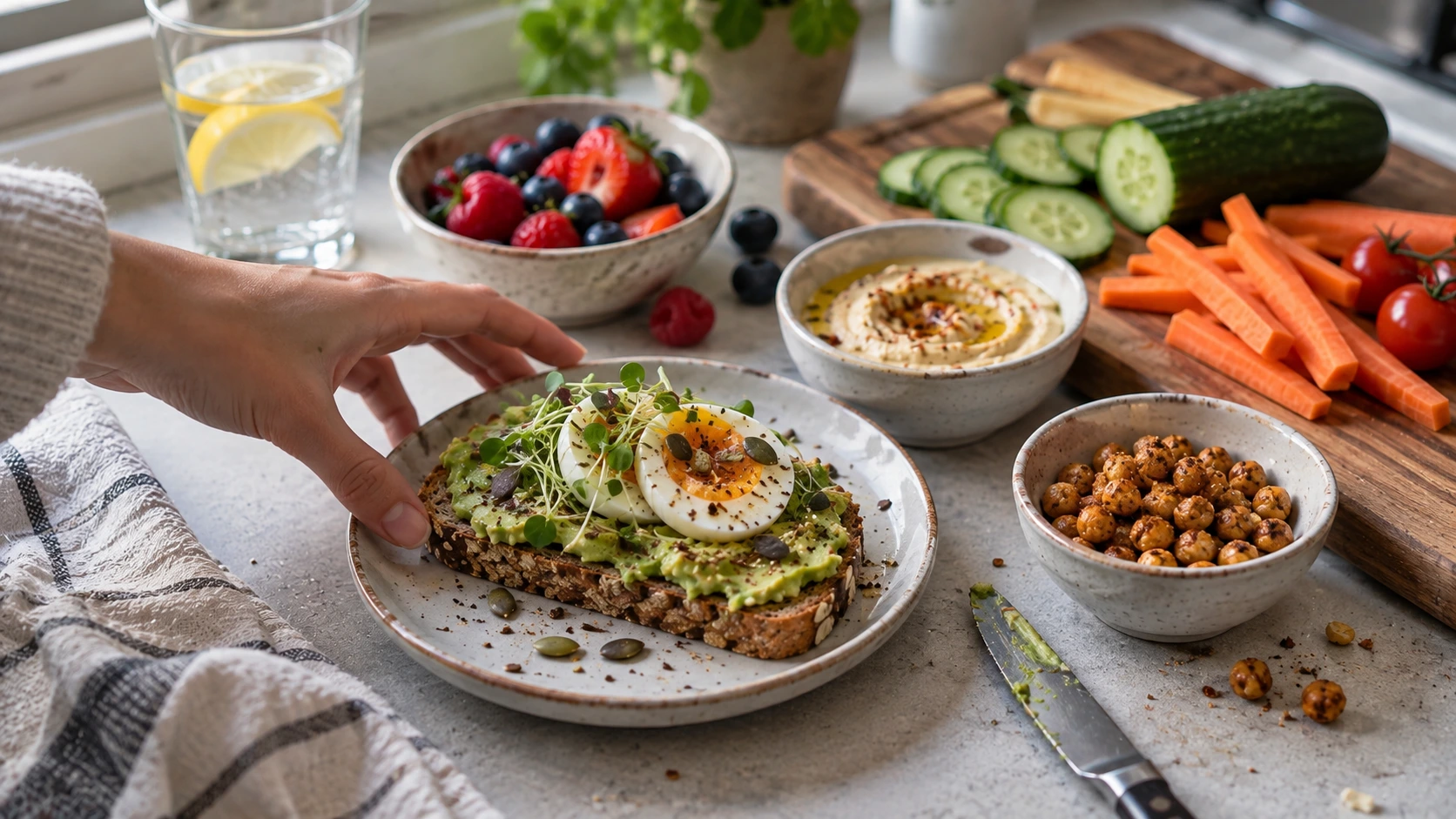
You don't need a special shopping list filled with expensive "health foods". A surprisingly useful snack cupboard can be built from ordinary ingredients.
Fruit and vegetables
Fruit and vegetables provide fibre, vitamins, minerals and plenty of natural flavour.
Keep a mixture of textures around: apples and carrots for crunch, berries for softness and acidity, cucumber for freshness, avocado for creaminess.
The more convenient they are to eat, the more likely they are to become part of your normal routine. Wash fruit when you get home. Slice vegetables in advance if that makes them easier to reach for.
Eggs
Eggs are remarkably versatile. A boiled egg is one of the simplest savoury snacks around, but eggs can also become mini omelettes, egg muffins or part of a more substantial snack plate.
Pair them with vegetables, wholegrain toast or avocado rather than treating the egg as the entire meal.
Chickpeas and beans
Chickpeas are particularly useful because they can go in several directions.
Blend them into hummus, roast them until crisp or add them to a small wrap. They're also useful when you want something plant-based with more substance.
Yoghurt
Plain Greek yoghurt is a useful base for sweet and savoury snacks. Add fruit and cinnamon for something sweet, or cucumber, herbs and lemon for a savoury dip.
Look at the ingredient list rather than relying entirely on the front of the packet. Some flavoured yoghurts contain considerably more added sugar than plain yoghurt.
Nuts and seeds
Almonds, walnuts, pumpkin seeds, sunflower seeds and chia seeds can add protein, fat, fibre and texture.
They also make an easy addition to yoghurt, fruit or homemade snack mixes.
For younger children, whole nuts can present a choking risk, so use age-appropriate forms such as smooth nut butter where appropriate.
Healthy Snacks Are Also About How You Cook Them
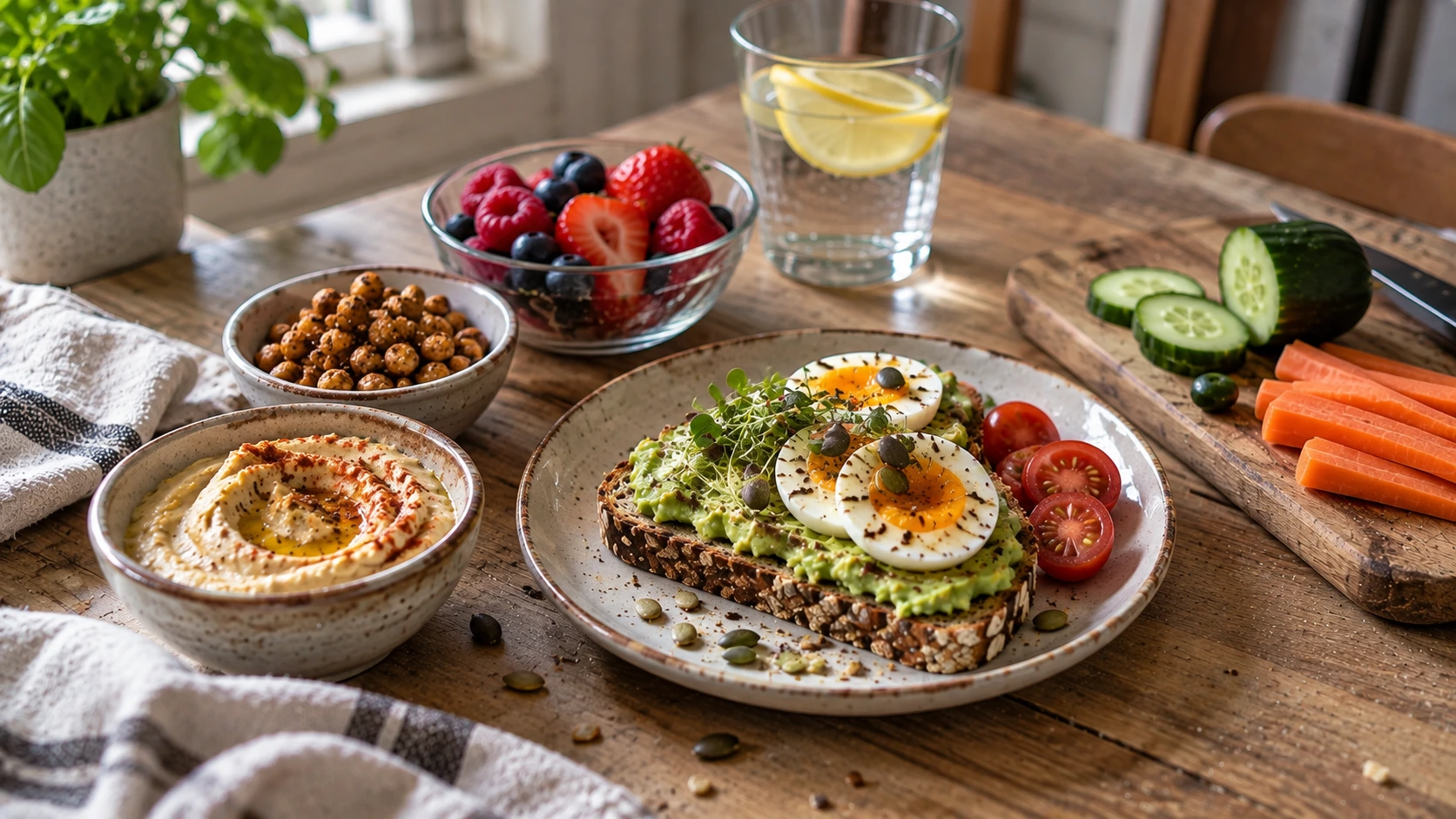
The ingredients matter, but preparation can completely change the result.
Roast for concentrated flavour and crunch
Roasting works particularly well for vegetables and chickpeas. High heat drives off moisture and creates browned edges, which means you can get a lot of flavour without complicated sauces.
A little olive oil, salt and seasoning is often enough.
Air fry when you want crispness quickly
An air fryer is useful for foods where texture is the main attraction. Chickpeas, vegetables and small potato pieces can develop crisp edges without deep frying.
That doesn't automatically make something healthy, of course. It's simply a useful cooking method when you want a crisp result with relatively little oil.
Use fresh ingredients for contrast
Not everything needs to be cooked.
A good snack might combine roasted chickpeas with fresh cucumber, or toasted seeds with berries and yoghurt. That contrast is often what makes a simple snack feel satisfying.
Don't overlook pan-toasting
A dry frying pan can transform oats, seeds, tortillas and nuts in just a few minutes.
Toast oats and pumpkin seeds before adding them to yoghurt bark. Warm a flatbread before filling it. Toasting can make a familiar ingredient taste completely different.
Healthy Snacks Don't Have to Be Perfect
There's a tendency to make healthy eating sound much more complicated than it needs to be.
You don't need to prepare elaborate snack boxes every Sunday. You don't need every snack to contain exactly the right ratio of protein, carbohydrates and fat.
Some days you'll eat an apple. Other days you'll have leftover chicken in a wrap. Sometimes a handful of nuts is exactly what you need.
The useful question is whether your overall pattern of eating contains plenty of nutritious foods and whether your snacks are helping rather than constantly leaving you hungry.
This is particularly relevant for busy families. Having a few dependable options available is often more realistic than trying to make something completely different every afternoon.
Our guide to Easy Lunch Ideas for Busy Families takes the same practical approach to making everyday food easier to manage.
How to Build Filling Snacks Without Making Them Complicated
A simple formula can help when you're standing in the kitchen wondering what to eat.
Start with a protein source.
Add a fruit or vegetable.
Then consider fibre-rich carbohydrates or wholegrains, depending on how substantial you want the snack to be.
Finally, add a little healthy fat or something with texture.
For example:
- Greek yoghurt + berries + pumpkin seeds
- Hummus + cucumber + roasted chickpeas
- Apple + peanut butter
- Boiled egg + avocado + wholegrain toast
- Cottage cheese + tomato + seeded crackers
- Banana + Greek yoghurt + cinnamon
None of these needs to be complicated.
The same principle works when you're creating snacks for children. Give them something familiar alongside something they're still learning to enjoy. Change the shape, texture or presentation when appropriate, rather than relying on completely different ingredients every time.
What About Sushi Pocket as a Snack?
A snack doesn't always have to be something you assemble from scratch.
For busy days, Sushi Pocket can work as a convenient option when you want something more substantial than a small packaged snack. It can be heated quickly and paired with fresh vegetables, fruit or another simple side depending on the occasion.
If you're wondering about ingredients, preparation or other product questions, the Sushi Pocket FAQ has more information.
You can also order Sushi Pocket online if you want to have a convenient option available for those days when making something from scratch isn't realistic.
The Bottom Line on Healthy Snacks
Good healthy snacks don't need to be bland, tiny or complicated.
Look for a combination of useful ingredients: protein for substance, fibre from fruit, vegetables or wholegrains, healthy fats where appropriate, and enough texture to make the food genuinely enjoyable.
For filling snacks, the combination matters more than any single "superfood". A creamy dip with crunchy vegetables, yoghurt with fruit and seeds, or an egg with avocado can be simple while still feeling like proper food.
And that's probably the most useful way to think about snacking: don't chase perfection. Build combinations that taste good, contain ingredients you recognise and actually keep you going until your next meal.
Follow Sushi Pocket