3 Healthy Bowls That Are Actually Interesting: Three Delicious Bowl Meals to Make at Home



Healthy Bowls That Are Actually Interesting
A good bowl should give you more than a pile of ingredients arranged next to each other. The best bowls have contrast: something warm with something fresh, something crisp with something creamy, and a dressing that pulls everything together. They’re also a useful way to make a satisfying meal without needing a complicated recipe or a fridge full of specialist ingredients.
These three bowl meals take that idea in different directions. One is built around Sushi Pocket, one combines sticky salmon with fresh vegetables and rice, and the third turns roasted vegetables and crispy chickpeas into a proper dinner rather than an afterthought.
If you enjoy practical recipes that don't take all evening, you might also like our guide to 3 Quick and Easy Meals.
What Makes These Bowls Different?
There’s a reason bowl meals have become such a reliable dinner format. You can combine several textures and flavours without having to make three separate dishes, and you can adjust the balance depending on what you have available.
The trick is not to treat the bowl as a dumping ground.
Start with a substantial base, add a good source of protein, then bring in vegetables, something crunchy and a dressing or sauce with enough acidity to wake everything up. You don't need every ingredient to be complicated. In fact, a simple combination usually works better.
The three recipes below each have a clear flavour direction, so they don't end up tasting like the same meal with different vegetables.
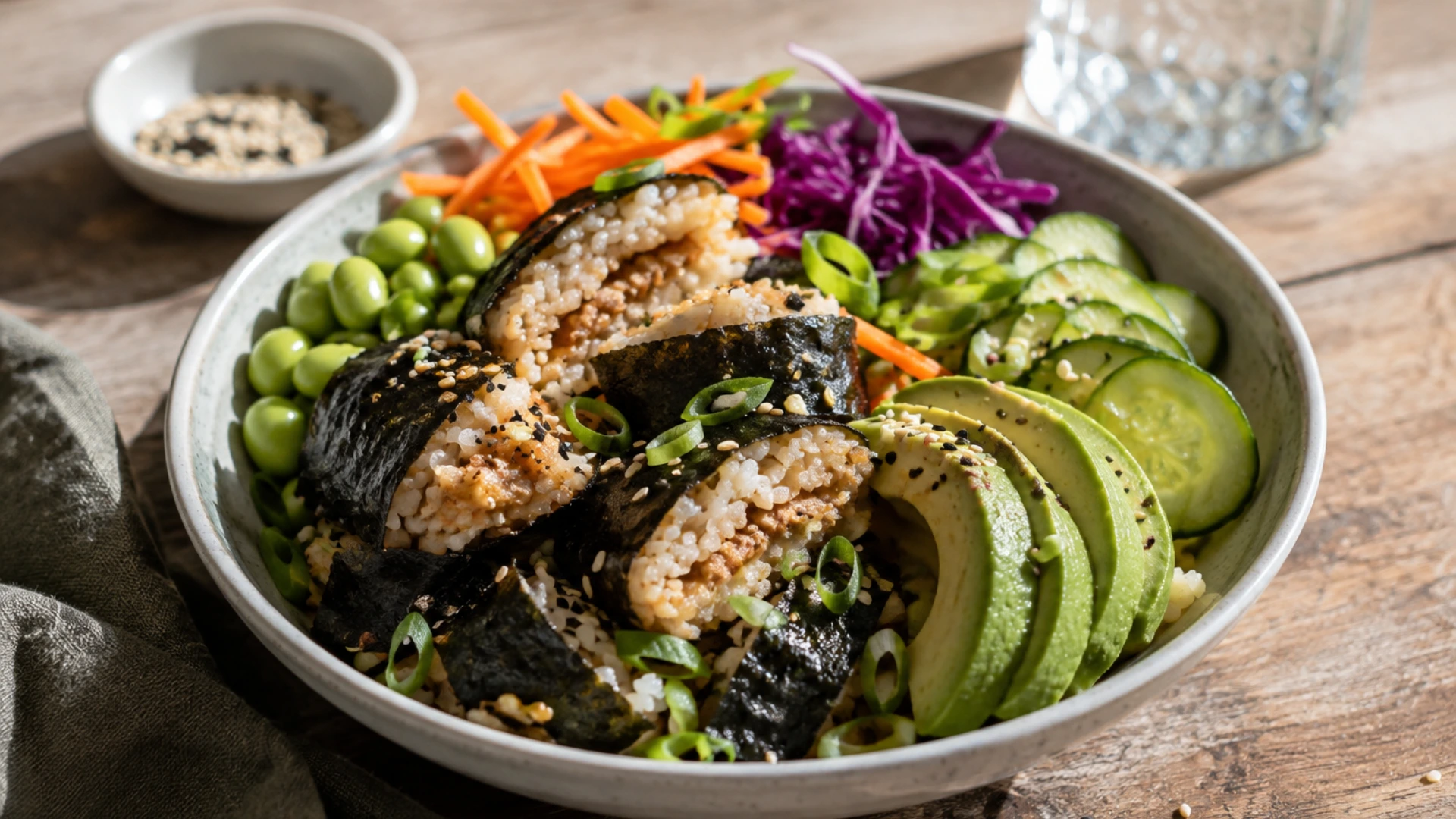
1. Crispy Sushi Pocket Bowl with Avocado, Edamame and Sesame Crunch
This is probably the most unexpected of the three. Instead of using rice as the base and adding sushi-style ingredients around it, use Sushi Pocket itself as the centre of the bowl.
The result is warm, crisp-edged Sushi Pocket alongside cool avocado, edamame, cucumber and a sharp sesame dressing. It has some of the familiar flavours of sushi, but the textures are completely different.
What you'll need
- 4 Sushi Pocket pieces
- 1 avocado
- 150g shelled edamame
- ½ cucumber
- 1 small carrot
- 2 spring onions
- 1 handful shredded red cabbage
- 1 tbsp sesame seeds
- Small handful roasted peanuts or cashews, roughly chopped
- Fresh coriander
- Lime wedges
For the dressing:
- 2 tbsp soy sauce
- 1 tbsp rice vinegar
- 1 tsp sesame oil
- 1 tsp honey
- ½ tsp grated fresh ginger
- Juice of ½ lime
How to make it
Cook the Sushi Pocket according to the preparation instructions until heated through and lightly crisp on the outside.
While it cooks, slice the cucumber into thin ribbons or half-moons and cut the carrot into fine strips. Mix the dressing in a small bowl and taste it. It should be salty, slightly sweet and sharp enough to cut through the richness of the avocado.
Warm the edamame briefly, then divide the cabbage between two bowls. Add the cucumber, carrot and edamame, followed by sliced avocado.
Cut the warm Sushi Pocket into halves or chunky pieces and place them in the middle. Drizzle over the dressing, then finish with sesame seeds, chopped nuts, spring onion and coriander.
Don't drown it in sauce. A little dressing across the vegetables and Sushi Pocket is enough.
For a family meal, put all the components on the table and let everyone build their own version. That can be particularly useful with children who prefer their ingredients separated. We've also put together some creative snack ideas for kids if you're looking for more ways to make everyday food a little more interesting.
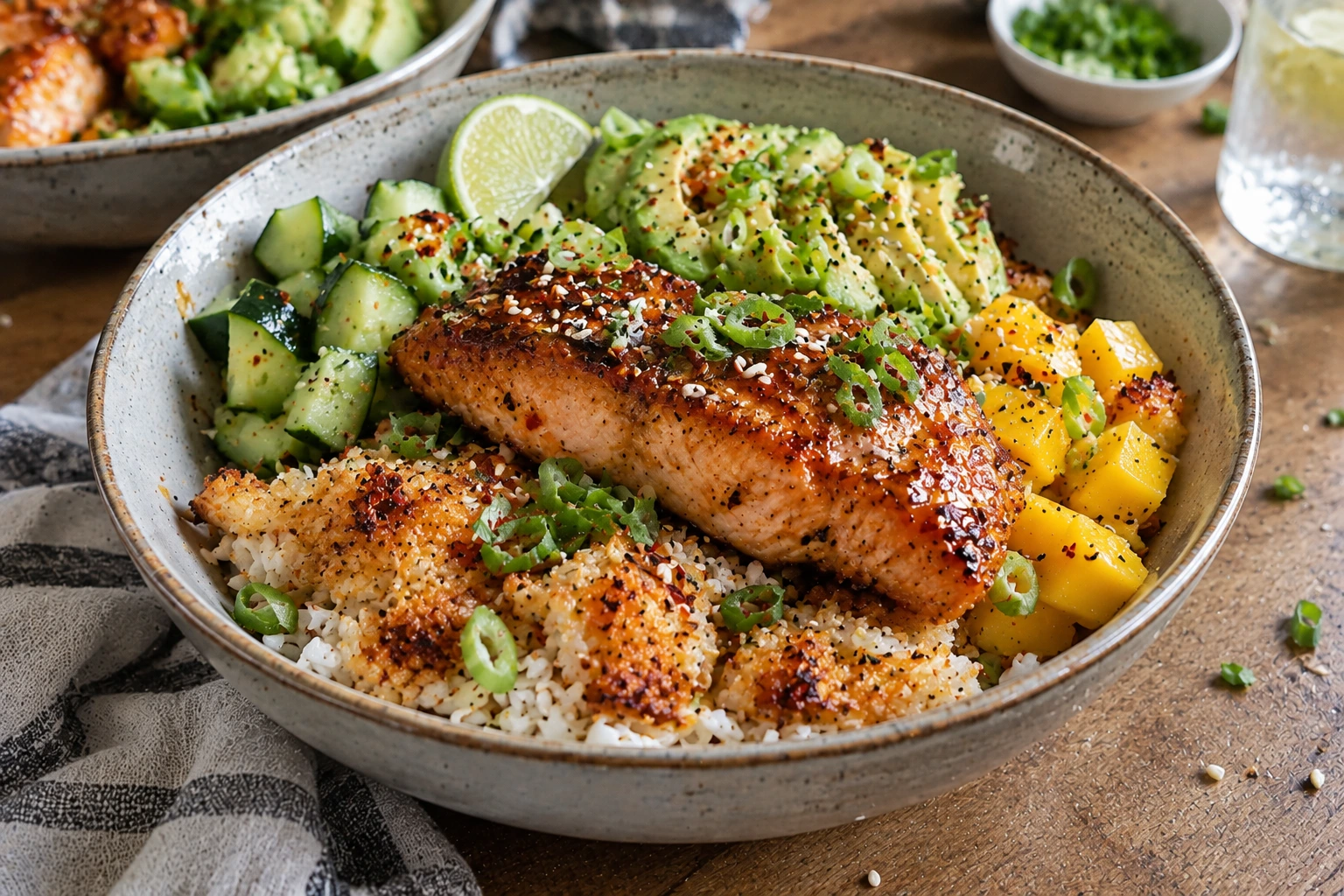
2. Sticky Miso Salmon Bowl with Cucumber, Mango and Crispy Rice
This one leans into sweet, salty and savoury flavours.
The salmon gets a quick miso glaze that caramelises in the pan, while the rest of the bowl stays fresh and crunchy. Mango might sound like an unusual addition to salmon, but the sweetness works particularly well against the salty miso and sharp lime.
The clever part is the rice. Rather than simply spooning cooked rice into the bowl, you crisp some of it in the same pan after cooking the salmon.
What you'll need
- 2 salmon fillets, about 150–180g each
- 3 cups cooked jasmine or basmati rice
- 1 tbsp white miso paste
- 1 tbsp soy sauce
- 1 tbsp honey
- 1 tsp sesame oil
- 1 tsp rice vinegar
- ½ cucumber
- 1 ripe mango
- 2 spring onions
- 1 small avocado
- 1 lime
- Sesame seeds
- 1 tsp vegetable oil
- Optional chilli flakes
How to make it
Mix the miso, soy sauce, honey, sesame oil and rice vinegar to make the glaze.
Pat the salmon dry and season lightly with pepper. Heat a little oil in a frying pan over medium-high heat and cook the salmon skin-side down if it has skin. Once the salmon is nearly cooked, turn it and brush generously with the miso glaze.
Let it cook for another minute or two until the glaze becomes glossy and slightly sticky. Remove the salmon and leave it to rest.
Add the cooked rice to the same pan. Spread it out rather than stirring constantly. Leave it for several minutes so the bottom can become golden and crisp, then turn sections of it with a spatula.
Meanwhile, dice the mango and cucumber and slice the avocado and spring onions.
Build the bowl with crispy rice first, followed by cucumber, mango and avocado. Flake the salmon into large pieces and place it over the top. Finish with spring onion, sesame seeds, lime juice and a little chilli if you like heat.
The combination of hot crispy rice, sticky salmon and cold crunchy vegetables is what makes this work. Don't skip the texture.
For another practical family-friendly lunch idea, have a look at Easy Lunch Ideas for Busy Families.
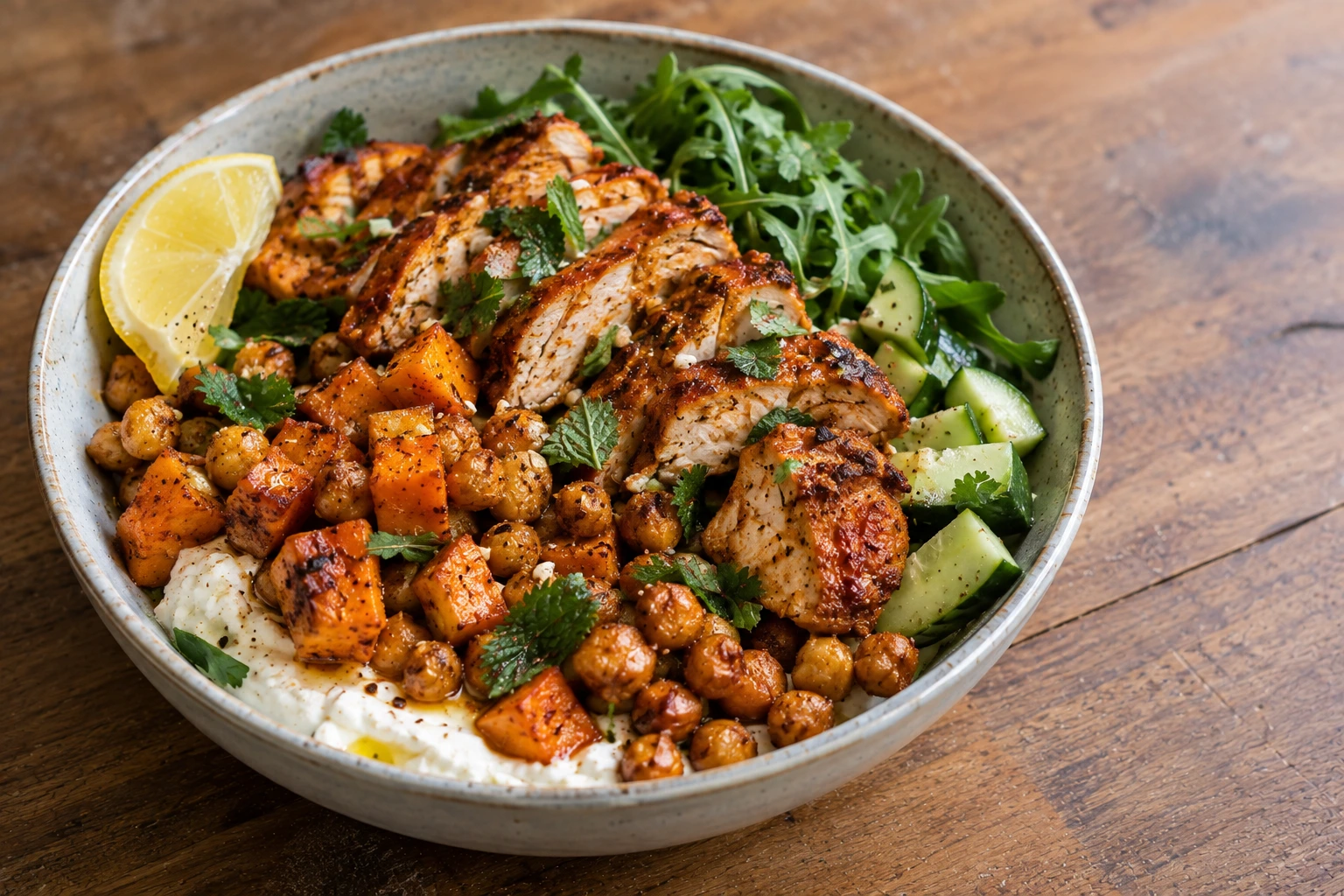
3. Harissa Chicken Bowl with Roasted Sweet Potato, Chickpeas and Whipped Feta
The third bowl is warmer, earthier and more substantial.
Sweet potato and chickpeas are roasted until the edges become properly browned, then served with spiced chicken, a creamy whipped feta sauce and a handful of fresh herbs. Harissa brings heat, but the amount can easily be adjusted for younger eaters.
This is also a particularly good option when you want a meal that feels generous without relying on a heavy sauce.
What you'll need
- 2 large chicken breasts
- 2 medium sweet potatoes
- 1 tin chickpeas, drained and rinsed
- 100g feta
- 2 tbsp Greek yoghurt
- 1 lemon
- 1 tbsp harissa paste
- 1 tsp ground cumin
- 1 tsp smoked paprika
- 1 tbsp olive oil
- 1 small cucumber
- Handful of rocket or baby spinach
- Fresh mint or coriander
- Salt and black pepper
How to make it
Heat the oven to 220°C.
Cut the sweet potatoes into small cubes. Pat the chickpeas dry with kitchen paper, then toss both with olive oil, cumin, smoked paprika, salt and pepper. Spread them across a large baking tray, leaving some space between the pieces.
Roast for around 20–25 minutes, turning once, until the sweet potato is soft inside and browned around the edges. The chickpeas should have some crispness to them.
While they cook, mix the harissa with a little olive oil and rub it over the chicken. Cook the chicken in a hot frying pan for around 5–7 minutes per side, depending on thickness, until cooked through. Let it rest before slicing.
For the feta sauce, blend or mash the feta with Greek yoghurt, the juice of half a lemon and a good grind of black pepper. It doesn't need to be perfectly smooth. A little texture is quite nice.
Slice the cucumber and prepare the herbs.
To assemble, spoon the whipped feta into the bottom of each bowl. Add the roasted sweet potato and chickpeas, followed by sliced chicken, cucumber and rocket. Finish with mint or coriander and another squeeze of lemon.
The feta provides richness, the lemon keeps the dish fresh, and the roasted chickpeas add the crunch that stops the softer ingredients from making the whole meal feel heavy.
How to Build Better Bowls at Home
The easiest way to create your own bowl meals is to think about five things rather than following a rigid recipe.
Start with a base
Rice, quinoa, roasted sweet potato, noodles, grains or Sushi Pocket can all work.
Add something substantial
Chicken, salmon, eggs, chickpeas, beans, tofu or another protein gives the meal staying power.
Bring in fresh vegetables
Cucumber, cabbage, carrots, avocado, tomatoes and leafy greens add freshness and texture without much cooking.
Add something crisp
Toasted seeds, nuts, crispy chickpeas, fried rice or roasted vegetables can completely change the experience of a meal.
Finish with a sauce
This doesn't have to mean a heavy dressing. Lime and soy, yoghurt and lemon, miso and honey, or tahini with garlic can be enough.
That balance is what makes a bowl satisfying. You don't need twelve ingredients. You need a few ingredients that do different jobs.
Three Bowls, Three Very Different Dinners
These three recipes show why bowl meals are so useful.
The crispy Sushi Pocket bowl is fresh, colourful and slightly playful, with sushi-inspired flavours and plenty of texture. The sticky miso salmon bowl is richer and more savoury, with caramelised salmon and crispy rice. The harissa chicken bowl is warmer and more comforting, built around roasted vegetables, chickpeas and creamy feta.
They also leave plenty of room for adjustment. Swap the vegetables according to what's in the fridge. Make the dressing stronger or milder. Add chilli for adults and leave it out for children. Cook extra rice or chicken and turn tomorrow's leftovers into another bowl.
That's really the appeal of this style of cooking. A good bowl doesn't require a complicated recipe or a perfectly stocked kitchen. It just needs a thoughtful combination of flavours, textures and ingredients that make sense together.
If you'd like to try Sushi Pocket in your own meals, you can find preparation information and common questions on our FAQ page, or order Sushi Pocket online for delivery.
Follow Sushi Pocket